
 Image 1 of 1
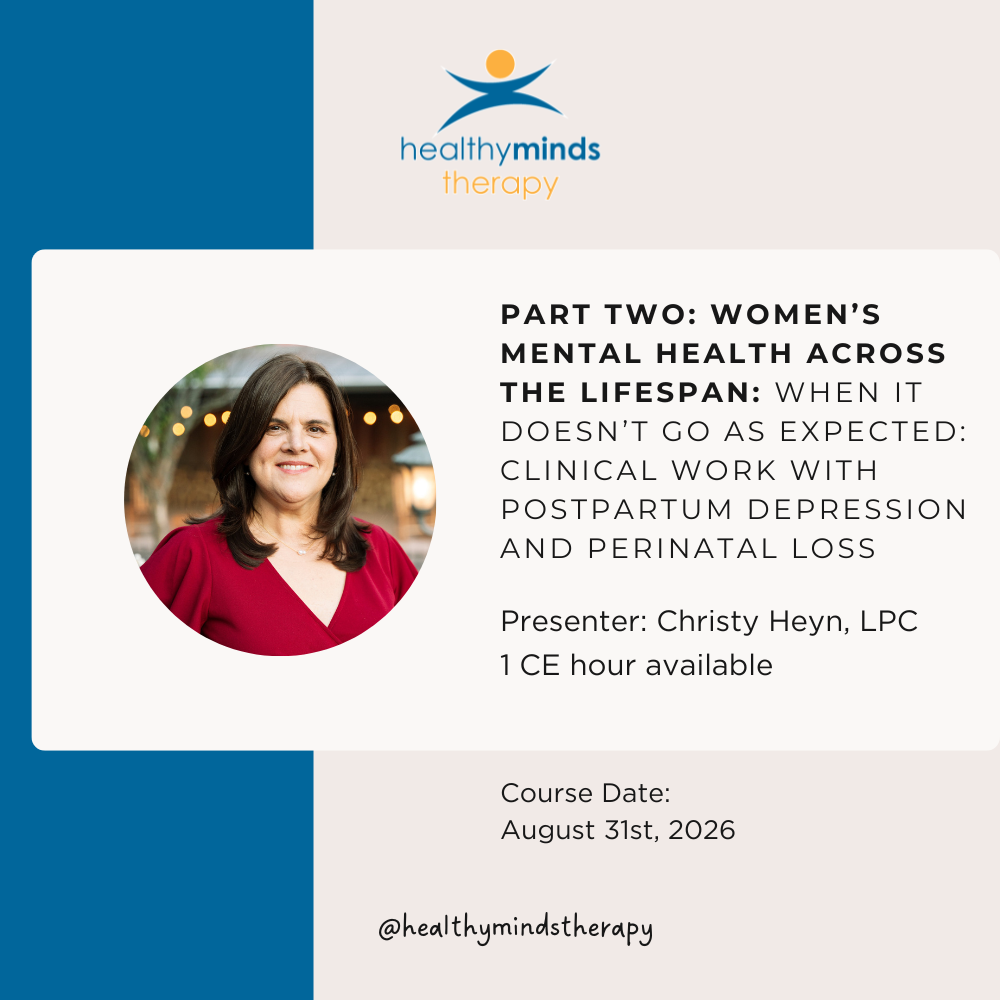
Part 2: Women's Mental Health Across the Lifespan
When It Doesn’t Go as Expected: Clinical Work with Postpartum Depression and Perinatal Loss
Postpartum depression and perinatal loss are among the most common and frequently undertreated concerns in women’s mental health. While clinicians may be familiar with the signs and symptoms of perinatal mood and anxiety disorders, recognizing these concerns is only the beginning. This 60-minute continuing education (CE) training moves beyond identification into active clinical treatment, helping mental health professionals develop greater confidence in supporting clients through postpartum depression, pregnancy loss, stillbirth, and infant loss.
Designed for therapists, counselors, social workers, psychologists, and other behavioral health providers at all levels of experience, this training provides a practical, evidence-informed exploration of the clinical complexities surrounding postpartum depression and perinatal grief. Participants will examine how biological changes, psychological factors, trauma, sleep disruption, relationship stress, previous mental health concerns, and social and cultural factors can influence the development and course of postpartum symptoms.
The training will also explore the unique nature of grief following pregnancy and infant loss. Unlike other forms of bereavement, perinatal loss can involve complicated and sometimes conflicting emotions, including grief, guilt, anger, shame, relief, isolation, and questions about identity and motherhood. Clinicians will consider how these experiences can affect an individual’s sense of self, relationships, future pregnancy decisions, and connection to their body and reproductive experiences.
Participants will learn how to:
Identify clinical presentations and risk factors associated with postpartum depression and perinatal mood concerns
Recognize factors that may contribute to the onset, persistence, or worsening of postpartum depression
Develop treatment approaches that move beyond symptom identification toward meaningful clinical intervention
Recognize common clinical stalls and barriers that may prevent clients from progressing in treatment
Differentiate postpartum depression from the expected emotional adjustments of the postpartum period, while recognizing when symptoms require further evaluation
Understand the complex grief responses associated with miscarriage, stillbirth, termination for medical reasons, and infant loss
Address guilt, shame, self-blame, identity disruption, and disenfranchised grief in perinatal loss
Apply trauma-informed approaches when loss is accompanied by traumatic medical experiences or birth-related trauma
Assess safety concerns and understand when additional psychiatric, medical, or higher-level support may be indicated
Support partners and families while maintaining appropriate clinical boundaries and respecting individual grief responses
Incorporate culturally responsive and individualized approaches to perinatal mental health and bereavement care
Identify opportunities for referral and collaboration with medical, psychiatric, reproductive, and community-based providers
The training will address common clinical challenges that can leave providers feeling uncertain about how to proceed. Participants will explore what can happen when treatment becomes stalled, when a client’s symptoms do not respond as expected, or when grief and depression overlap in ways that make clinical decision-making more complex. Emphasis will be placed on practical strategies clinicians can use within their scope of practice to re-evaluate treatment goals, strengthen the therapeutic approach, and determine when additional assessment or referral is appropriate.
Throughout the course, participants will also consider the impact of language, cultural expectations, reproductive history, family systems, and societal assumptions on the experience of postpartum depression and perinatal loss. The goal is not simply to help clinicians recognize these presentations, but to equip them with greater confidence and clinical competence in treating the whole person while honoring the complexity of their reproductive and grief experiences.
By the end of this training, participants will have practical tools for navigating postpartum depression and perinatal loss with greater clinical confidence, compassion, and awareness of when treatment, consultation, or additional support is needed.
When It Doesn’t Go as Expected: Clinical Work with Postpartum Depression and Perinatal Loss
Postpartum depression and perinatal loss are among the most common and frequently undertreated concerns in women’s mental health. While clinicians may be familiar with the signs and symptoms of perinatal mood and anxiety disorders, recognizing these concerns is only the beginning. This 60-minute continuing education (CE) training moves beyond identification into active clinical treatment, helping mental health professionals develop greater confidence in supporting clients through postpartum depression, pregnancy loss, stillbirth, and infant loss.
Designed for therapists, counselors, social workers, psychologists, and other behavioral health providers at all levels of experience, this training provides a practical, evidence-informed exploration of the clinical complexities surrounding postpartum depression and perinatal grief. Participants will examine how biological changes, psychological factors, trauma, sleep disruption, relationship stress, previous mental health concerns, and social and cultural factors can influence the development and course of postpartum symptoms.
The training will also explore the unique nature of grief following pregnancy and infant loss. Unlike other forms of bereavement, perinatal loss can involve complicated and sometimes conflicting emotions, including grief, guilt, anger, shame, relief, isolation, and questions about identity and motherhood. Clinicians will consider how these experiences can affect an individual’s sense of self, relationships, future pregnancy decisions, and connection to their body and reproductive experiences.
Participants will learn how to:
Identify clinical presentations and risk factors associated with postpartum depression and perinatal mood concerns
Recognize factors that may contribute to the onset, persistence, or worsening of postpartum depression
Develop treatment approaches that move beyond symptom identification toward meaningful clinical intervention
Recognize common clinical stalls and barriers that may prevent clients from progressing in treatment
Differentiate postpartum depression from the expected emotional adjustments of the postpartum period, while recognizing when symptoms require further evaluation
Understand the complex grief responses associated with miscarriage, stillbirth, termination for medical reasons, and infant loss
Address guilt, shame, self-blame, identity disruption, and disenfranchised grief in perinatal loss
Apply trauma-informed approaches when loss is accompanied by traumatic medical experiences or birth-related trauma
Assess safety concerns and understand when additional psychiatric, medical, or higher-level support may be indicated
Support partners and families while maintaining appropriate clinical boundaries and respecting individual grief responses
Incorporate culturally responsive and individualized approaches to perinatal mental health and bereavement care
Identify opportunities for referral and collaboration with medical, psychiatric, reproductive, and community-based providers
The training will address common clinical challenges that can leave providers feeling uncertain about how to proceed. Participants will explore what can happen when treatment becomes stalled, when a client’s symptoms do not respond as expected, or when grief and depression overlap in ways that make clinical decision-making more complex. Emphasis will be placed on practical strategies clinicians can use within their scope of practice to re-evaluate treatment goals, strengthen the therapeutic approach, and determine when additional assessment or referral is appropriate.
Throughout the course, participants will also consider the impact of language, cultural expectations, reproductive history, family systems, and societal assumptions on the experience of postpartum depression and perinatal loss. The goal is not simply to help clinicians recognize these presentations, but to equip them with greater confidence and clinical competence in treating the whole person while honoring the complexity of their reproductive and grief experiences.
By the end of this training, participants will have practical tools for navigating postpartum depression and perinatal loss with greater clinical confidence, compassion, and awareness of when treatment, consultation, or additional support is needed.