

Continuing education
Keep learning. Keep growing.
Continuing education for mental health professionals who want practical tools, fresh perspective, and learning they can bring directly into their work.

Professional development
Learning you can bring into the room
Healthy Minds Therapy offers continuing education designed for mental health professionals who want practical, relevant training they can apply directly in their work with clients.
Healthy Minds Therapy, PLLC is an NBCC Approved Continuing Education Provider, ACEP No. 7372.
Programs that do not qualify for NBCC credit will be clearly identified.

Current trainings
Explore upcoming continuing education opportunities
Browse available trainings for mental health professionals, with clear details on topics, presenters, CE hours, and registration.
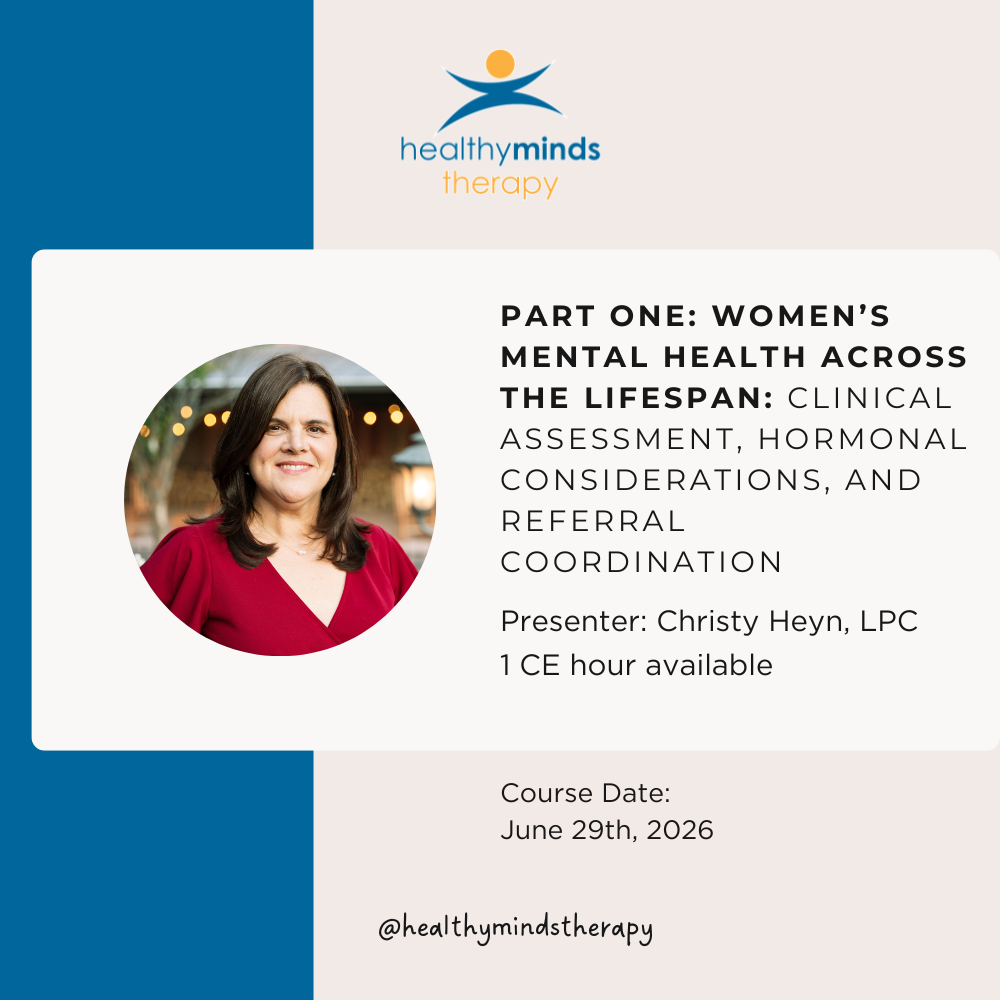
Clinical Assessment, Hormonal Considerations, and Referral Coordination
This 60-minute continuing education (CE) training for mental health professionals provides a practical, evidence-informed exploration of women’s mental health in outpatient therapy settings. The course will focus on hormonal and reproductive transitions that are frequently overlooked, misdiagnosed, or misunderstood in clinical practice.
Designed for therapists, counselors, social workers, psychologists, and other behavioral health providers, this women’s mental health training examines how hormonal fluctuations across the lifespan—including menstrual cycles, PMDD, pregnancy, postpartum changes, fertility challenges, perimenopause, and menopause—can significantly impact mood, anxiety, trauma symptoms, cognition, sleep, and nervous system regulation.
Participants will learn how to:
Integrate hormonal and reproductive mental health screening into intake and treatment planning
Recognize signs of hormone-related mood and anxiety disorders
Reduce the risk of misdiagnosis in women’s mental health care
Differentiate trauma-related symptoms from hormonally influenced symptom patterns
Understand the nervous system impacts of reproductive transitions
Apply ethical, scope-appropriate clinical decision-making in outpatient settings
This CE course also addresses common diagnostic pitfalls. This includes when symptoms may be inaccurately attributed solely to depression, anxiety, personality disorders, or trauma without adequate assessment of biological contributors. Clinicians will gain greater diagnostic clarity and confidence when treating clients navigating perinatal mental health concerns, reproductive transitions, and midlife hormonal changes.
Throughout the training, participants will receive information on how to provide culturally responsive, inclusive care that honors diverse reproductive experiences. The overall goal is to strengthen clinical competence in women’s mental health.
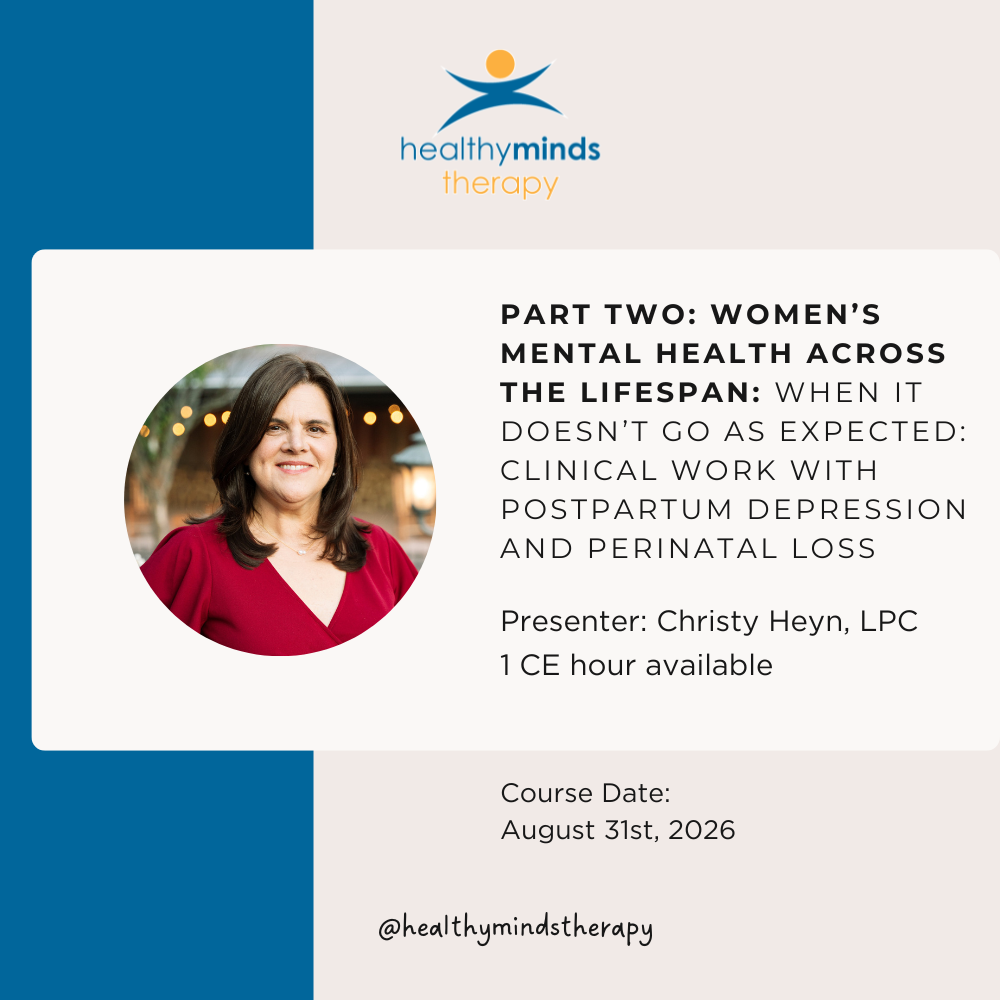
When It Doesn’t Go as Expected: Clinical Work with Postpartum Depression and Perinatal Loss
Postpartum depression and perinatal loss are among the most common and frequently undertreated concerns in women’s mental health. While clinicians may be familiar with the signs and symptoms of perinatal mood and anxiety disorders, recognizing these concerns is only the beginning. This 60-minute continuing education (CE) training moves beyond identification into active clinical treatment, helping mental health professionals develop greater confidence in supporting clients through postpartum depression, pregnancy loss, stillbirth, and infant loss.
Designed for therapists, counselors, social workers, psychologists, and other behavioral health providers at all levels of experience, this training provides a practical, evidence-informed exploration of the clinical complexities surrounding postpartum depression and perinatal grief. Participants will examine how biological changes, psychological factors, trauma, sleep disruption, relationship stress, previous mental health concerns, and social and cultural factors can influence the development and course of postpartum symptoms.
The training will also explore the unique nature of grief following pregnancy and infant loss. Unlike other forms of bereavement, perinatal loss can involve complicated and sometimes conflicting emotions, including grief, guilt, anger, shame, relief, isolation, and questions about identity and motherhood. Clinicians will consider how these experiences can affect an individual’s sense of self, relationships, future pregnancy decisions, and connection to their body and reproductive experiences.
Participants will learn how to:
Identify clinical presentations and risk factors associated with postpartum depression and perinatal mood concerns
Recognize factors that may contribute to the onset, persistence, or worsening of postpartum depression
Develop treatment approaches that move beyond symptom identification toward meaningful clinical intervention
Recognize common clinical stalls and barriers that may prevent clients from progressing in treatment
Differentiate postpartum depression from the expected emotional adjustments of the postpartum period, while recognizing when symptoms require further evaluation
Understand the complex grief responses associated with miscarriage, stillbirth, termination for medical reasons, and infant loss
Address guilt, shame, self-blame, identity disruption, and disenfranchised grief in perinatal loss
Apply trauma-informed approaches when loss is accompanied by traumatic medical experiences or birth-related trauma
Assess safety concerns and understand when additional psychiatric, medical, or higher-level support may be indicated
Support partners and families while maintaining appropriate clinical boundaries and respecting individual grief responses
Incorporate culturally responsive and individualized approaches to perinatal mental health and bereavement care
Identify opportunities for referral and collaboration with medical, psychiatric, reproductive, and community-based providers
The training will address common clinical challenges that can leave providers feeling uncertain about how to proceed. Participants will explore what can happen when treatment becomes stalled, when a client’s symptoms do not respond as expected, or when grief and depression overlap in ways that make clinical decision-making more complex. Emphasis will be placed on practical strategies clinicians can use within their scope of practice to re-evaluate treatment goals, strengthen the therapeutic approach, and determine when additional assessment or referral is appropriate.
Throughout the course, participants will also consider the impact of language, cultural expectations, reproductive history, family systems, and societal assumptions on the experience of postpartum depression and perinatal loss. The goal is not simply to help clinicians recognize these presentations, but to equip them with greater confidence and clinical competence in treating the whole person while honoring the complexity of their reproductive and grief experiences.
By the end of this training, participants will have practical tools for navigating postpartum depression and perinatal loss with greater clinical confidence, compassion, and awareness of when treatment, consultation, or additional support is needed.
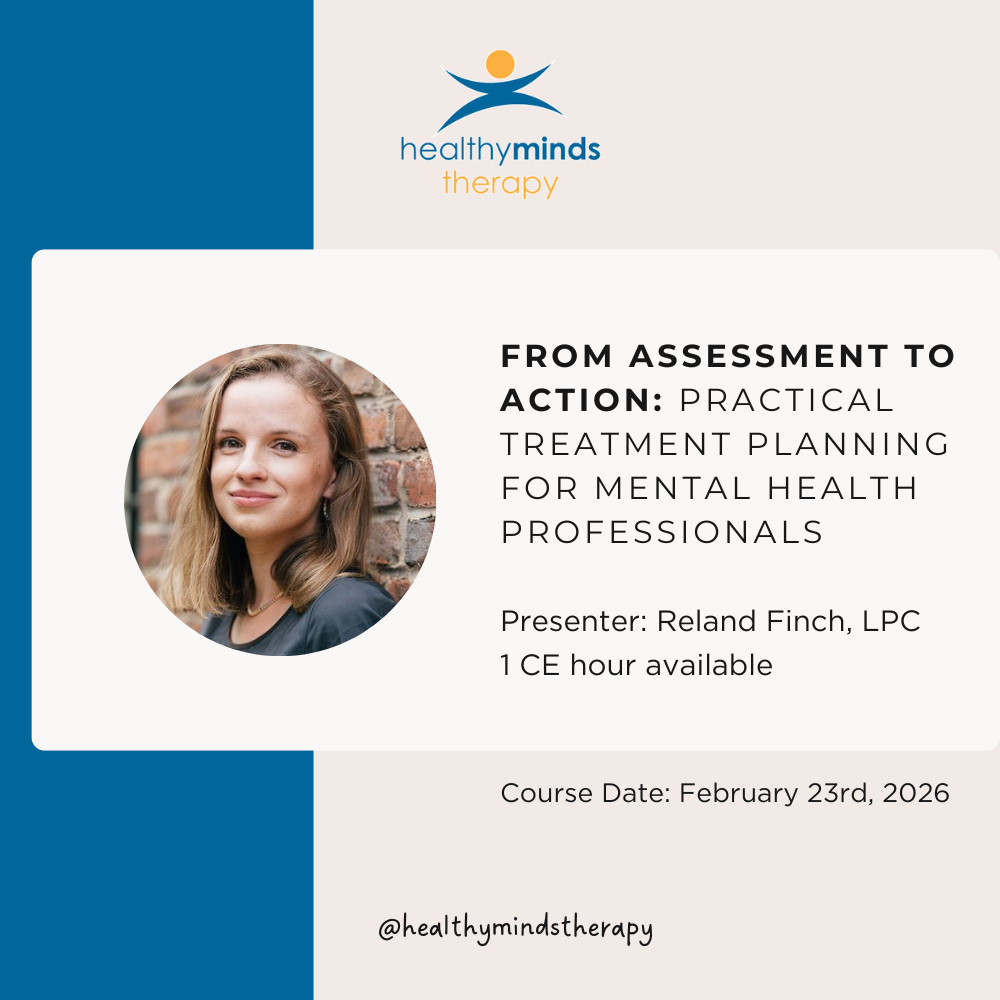
From Assessment to Action: Practical Treatment Planning
Effective treatment planning is more than a required document. It is the clinical roadmap that guides meaningful, measurable client progress. Yet many clinicians struggle to translate rich assessment data into clear, actionable, and insurance-compliant treatment plans that truly drive outcomes.
This continuing education course provides mental health professionals with a structured, practical approach to developing individualized, strengths-based treatment plans that align with diagnosis, medical necessity, and client goals. Participants will learn how to move from assessment findings to SMART objectives, select appropriate interventions, and ensure documentation supports clinical decision-making and reimbursement requirements.
Through case examples and real-world applications, clinicians will strengthen their ability to:
Link assessment data directly to treatment goals
Write measurable, outcome-driven objectives
Select interventions grounded in clinical theory and best practice
Demonstrate medical necessity clearly and effectively
Create collaborative plans that increase client engagement and buy-in
Avoid common documentation pitfalls that increase audit risk
This course is ideal for counselors, social workers, psychologists, marriage and family therapists, and clinical supervisors seeking to enhance both clinical clarity and documentation confidence.
Participants will leave with practical tools and templates they can immediately implement in practice.
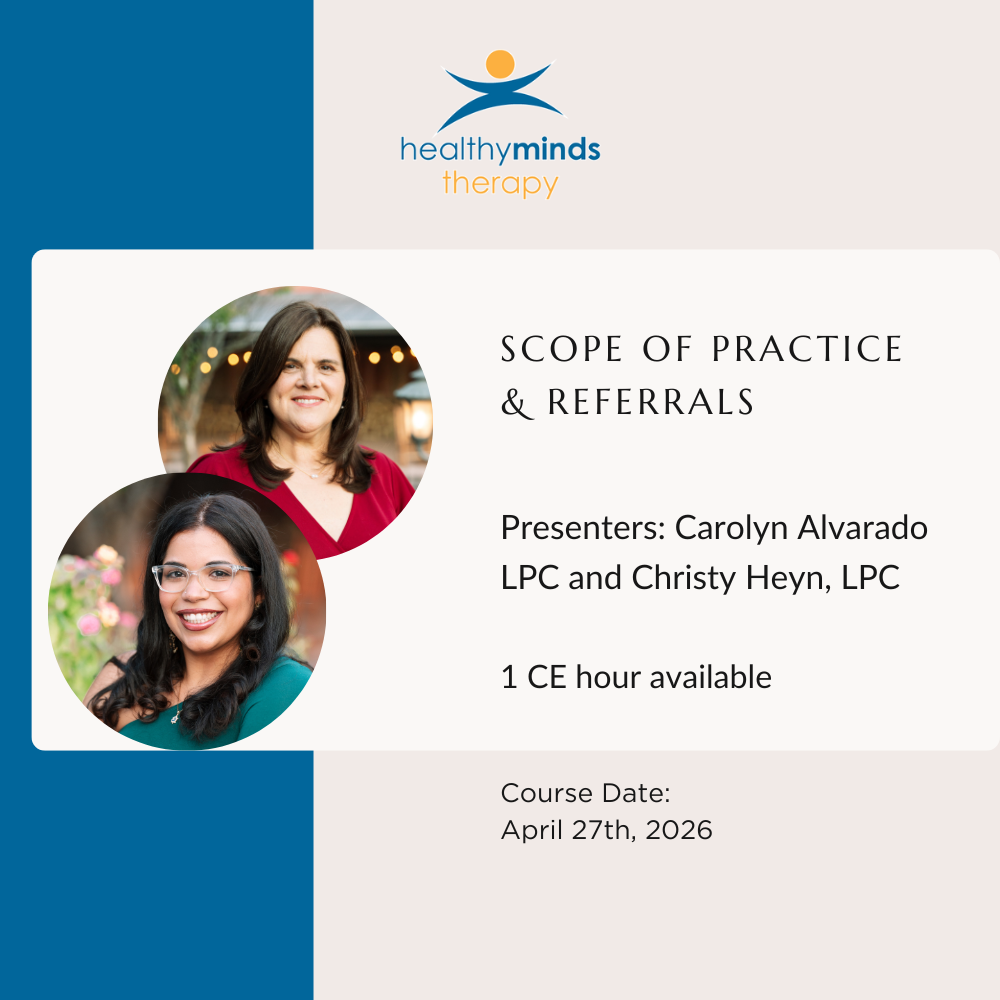
Scope of Practice & Referrals
This continuing education (CE) training provides therapy staff with a comprehensive understanding of the scope of practice in mental health settings. This course strengthens confidence in navigating complex clinical situations while maintaining professional and legal boundaries.
Participants will learn structured clinical decision-making frameworks to evaluate scope of practice concerns, determine competence levels, and assess when supervision, consultation, or referral is necessary. The training emphasizes practical application, helping clinicians recognize when clients’ needs extend beyond their training, licensure, or specialization.
Key topics include:
Defining and understanding the scope of practice for therapists
Ethical standards and professional boundaries in therapy
Recognizing limitations of competence
Effective referral processes in mental health settings
Risk management and liability considerations
Documentation best practices
Addressing dual relationships and boundary challenges
Through real-world case examples and interactive discussion, participants will strengthen their ability to make ethical, client-centered decisions that protect both client welfare and professional integrity.
By the end of this CE course, therapy staff will have increased clarity around ethical decision-making in clinical practice, stronger risk management skills, and practical tools to confidently operate within their professional scope of practice.
Stay in the loop
Get updates on upcoming trainings
Be the first to hear about new continuing education opportunities, registration openings, and future professional development offerings from Healthy Minds Therapy.
Before you register
A few things to know
We want registration to feel clear and straightforward. Review the policies below for details about cancellations, refunds, and questions related to continuing education programs.
-
If you have a concern regarding a continuing education program, please contact our ACEP administrator, Jack Fox, at 540-845-6940 ext. 132 or jfox@healthyminds-therapy.com. Healthy Minds Therapy will review your concern and provide a response within seven business days.
-
Program fees are disclosed before registration. Cancellations made more than 24 hours before a scheduled training are eligible for a full refund.
Cancellations made within 24 hours of a training are nonrefundable. However, the registration fee may be applied toward another Healthy Minds Therapy continuing education program within six months.
If Healthy Minds Therapy cancels a training, participants will receive a full refund.
Have a question?
Not sure which training is right for you?
Reach out to the Healthy Minds Therapy team with questions about upcoming trainings, registration, or continuing education requirements.